 By admin
AA GAME Apps: What Changes After Your First Month of Play
Imagine you have been logging into the same card table every evening for four weeks. The novelty has worn off. You know where the side attractions sit on the map, you recognize the rhythm of a slow lobby, and you have stopped tapping every button just to see what it does. That is the moment when AA GAME Apps stops feeling like a new toy and starts feeling like a routine — and routines are where most players either sharpen up or quietly drift away. This piece is written for the person sitting at that crossroads, and for the cautious client who wants to know what actually changes between month one and month six before committing more time.
The short answer is that almost nothing about the interface changes. What changes is you. Your tolerance for noise, your reading of table tempo, your patience with a cold streak, and your willingness to treat a game park map as a tool rather than a decoration. Below is a scenario walkthrough of how that shift tends to unfold, followed by variations for players whose situation looks a little different.
The First Month: Learning the Map Before the Cards
Beginners almost always do this backwards. They open an app, find the first table that accepts them, and start playing. The map — the part that tells you which rooms exist, what each room is tuned for, and where the quieter corners are — gets ignored until week three. Experienced users do the opposite. They spend the first session or two walking the layout without playing a single hand, noting which areas fill up at which hours and which ones stay calm.
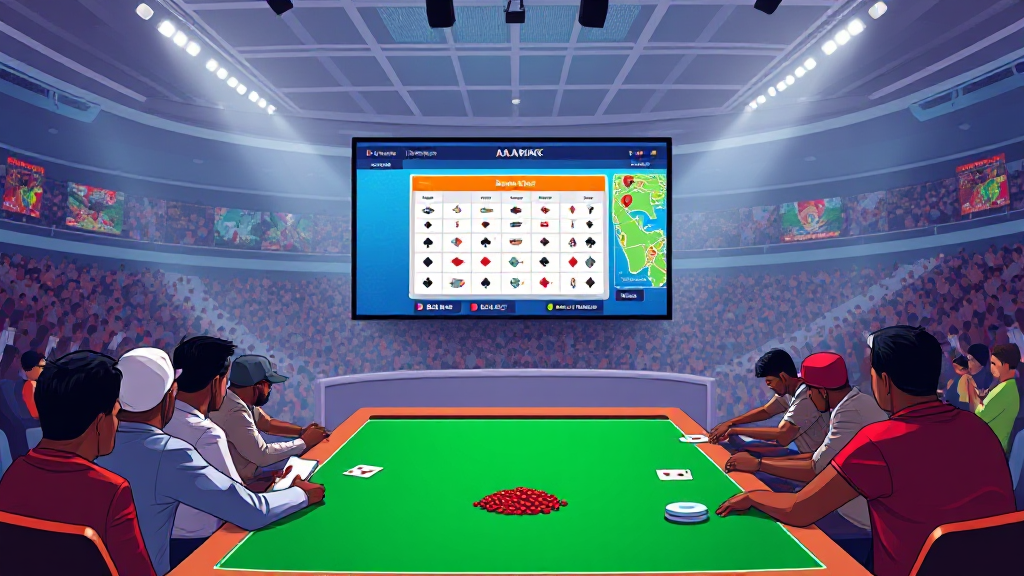
If you are advising a cautious client, this is the first thing worth telling them: the map is not marketing. On a directory-style platform like AA Game Park, the map is the actual product. It tells you what kind of session you are about to have before you sit down. A player who learns the map in week one avoids the most common month-one frustration, which is bouncing between rooms that all feel slightly wrong without understanding why.
The second month-one shift is subtler. Beginners measure a session by whether they won. Players who last measure a session by whether they made good decisions in the situations they were given. That reframing sounds like motivational filler, but it has a practical consequence: it stops you from chasing a bad table just to recover a bad hour. The experienced user leaves. The beginner stays, and the staying is what burns them out.
What Actually Changes Between Month One and Month Six
Here is the honest breakdown, written as if I were sitting across from a client who has asked me whether the time investment is worth it.
Decision speed. In month one, every turn feels like a fresh puzzle. By month three, pattern recognition has taken over. You are no longer calculating from scratch; you are matching what you see against a library of situations you have already survived. This is the single biggest change, and it is also the one that makes the game more enjoyable rather than less.
Tolerance for variance. New players treat a cold stretch as evidence that something is broken. Experienced players treat it as a normal cost of doing business. Nothing in the app changes to produce this shift — it is purely a matter of having seen the same pattern enough times to stop being surprised by it.
Use of side attractions. The side attractions on a game park map exist for a reason, and beginners tend to either overuse them or ignore them entirely. The over-users scatter their attention and never build depth in one room. The ignorers get bored and quit. The middle path — one main room, one or two side attractions used deliberately — is what month-six players settle into almost without noticing.
Session discipline. This is the change that separates people who are still playing in month six from people who are not. Beginners play until they are tired, frustrated, or out of time. Experienced users decide the length of a session before it starts and treat that decision as fixed. It is unglamorous, and it is the most reliable predictor of whether someone sticks with a card game long-term.
None of these changes require a new app, a paid tier, or a special room. They require repetition and a small amount of self-observation. That is worth saying plainly, because the marketing around gaming apps often implies that the next download is the thing that will fix your experience. It usually is not.
Scenario Variations: When the Standard Path Does Not Fit
The walkthrough above assumes a player with a fairly stable evening routine. Real life is messier, so here are the variations I would walk a client through depending on their situation.
The player with twenty minutes a day. Do not try to play a full session. Pick one room, play a short block, and leave. The map is still useful here, but only the top layer of it — you want to know which rooms are viable in a short window and which ones require a longer commitment to feel worthwhile. Short-session players who try to play long-session rooms are the most common source of month-one quitting.
The player returning after a long break. Treat the first week as a re-onboarding, not a continuation. Room populations shift, side attractions get reorganized, and the tempo of a table you remember fondly may not exist anymore. Walking the map again before playing is not wasted time; it is the cheapest way to avoid a frustrating first session back.
The player who only wants to understand the ecosystem. Some people are not there to play at all. They want to know how a rummy game park is structured, what the rooms represent, and how the directory is organized. For that reader, the map is the entire experience, and there is no shame in that. A directory is meant to be read.
The cautious client evaluating the platform. If you are the person deciding whether to let someone else spend time here, the questions to ask are not about winning. Ask about session length, about how the map is organized, and about whether the side attractions add variety or just add noise. Those answers tell you far more about the platform than any headline number.
Across all four variations, the same principle holds: the first month is for orientation, and the months after are for refinement. Skipping orientation does not save time. It just moves the confusion later, when you have more invested and less patience.
Reading the Game Park Map Like Someone Who Has Been There
By the time a player reaches month three, they usually have an opinion about the map — and that opinion is often wrong in a specific way. They think they have memorized it. What they have actually memorized is the route they take every night. Those are not the same thing.
A more useful habit is to revisit the map periodically with a single question in mind: what have I not tried, and why not? Sometimes the answer is “because it is not for me,” which is fine. Sometimes the answer is “because I assumed it was for advanced players,” which is worth testing. The map on a well-organized rummy directory is not a difficulty ladder. It is a set of rooms with different tempos, and tempo is a personal preference, not a skill level.
Experienced users also learn to read the map for timing rather than content. The same room at 8 p.m. and at 11 p.m. can feel like two different places. Beginners notice this as a vague sense that “the app is different tonight.” Players who have been around a while simply plan around it. If your available window is late, choose rooms that stay lively late; if it is early, choose rooms that fill early. This is basic, and it is ignored constantly.
One more point for the cautious client: the value of a directory-style platform is that it lets you observe before you commit. You can study the layout, understand the room types, and form a view of the ecosystem without spending a single session inside it. Use that. It is the closest thing to a free trial that a card game environment offers.
How to Tell Whether the Routine Is Still Working
The hardest question for any long-term player is not “am I good at this” but “is this still doing anything for me.” A routine can be pleasant and still be stale, and staleness in a card game usually shows up as autopilot — playing without noticing, sessions that blur together, a vague sense of going through motions.
The fix is not to quit and not to grind harder. It is to change one variable deliberately. Pick a different room from the map. Try a side attraction you have been ignoring. Shorten your sessions for a week and see whether you miss the length. The goal is to reintroduce a small amount of attention into something that has become automatic. Most players who quit in month six do so because they never made this adjustment, not because the game stopped being interesting.
For the consultant’s-client framing, here is the clean summary. In month one, you are learning where things are. In month three, you are learning how you play. In month six, you are deciding whether the routine still earns its place in your evening. Each stage has a different failure mode, and each failure mode is fixable if you catch it early. The app is not going to catch it for you.
If you take one thing from this walkthrough, take the orientation habit. Learn the map before you learn the cards. It costs a session or two up front and saves a month of confused bouncing later. Everything else — decision speed, variance tolerance, session discipline — follows from having a clear picture of where you actually are.
Frequently Asked Questions About AA GAME Apps
How long does it take before the app stops feeling unfamiliar?
For most players, the layout and basic flow feel natural after about two to three weeks of regular, short sessions. The unfamiliarity that lingers past that point is usually about table tempo rather than the interface itself, and that takes longer because it depends on the people you happen to play alongside.
Should a beginner start with the side attractions or the main rooms?
Start with the main rooms and treat side attractions as later additions. Beginners who spread themselves across everything in week one tend to build no depth anywhere and quit early. Pick one room, get comfortable, then expand deliberately using the map as your guide.
What is the biggest difference between how beginners and experienced users approach a session?
Experienced users decide the length of a session before it begins and stick to that decision. Beginners play until they are tired or frustrated. That single difference in planning accounts for most of the gap in how enjoyable the experience feels over several months.
Is it worth studying the game park map if I only play occasionally?
Yes, and arguably more so. Occasional players have less time to recover from a bad room choice, so knowing which areas suit a short window is more valuable to them than to someone who plays every night. A few minutes with the map before a session is a good use of limited time.